Founder-Market-Fit Is the Moat AI Can't Clone
When AI can clone any below-the-line product in a weekend, the one thing it can't reproduce is the right person on the problem, so founder-market-fit, the obsession and owned audience that out-works a cloner, is the one moat left below the line.
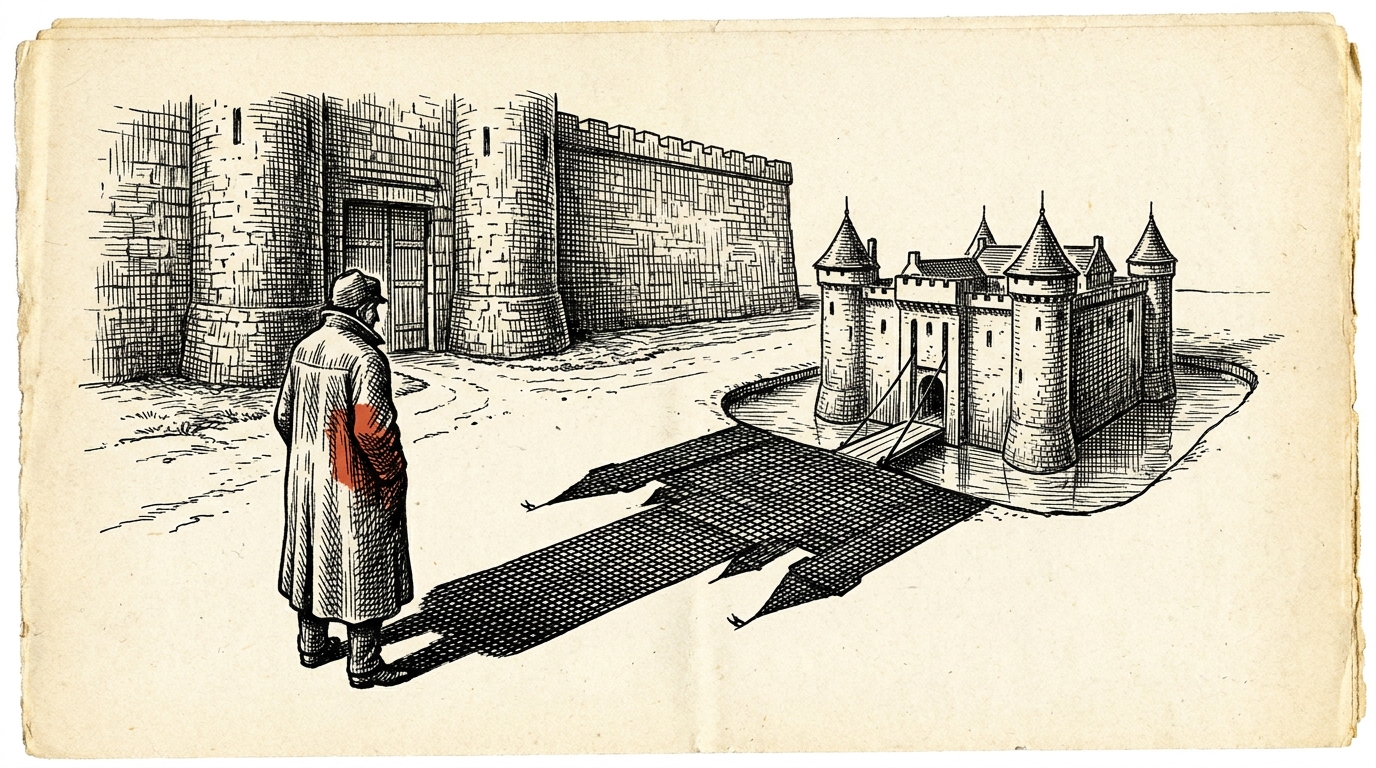
When the tools can rebuild any below-the-line product in a weekend, the one thing they can't reproduce is the right person on the problem, and that's what founder-market-fit is. Picture two people pitching the identical idea on the same afternoon. One has lived inside the problem for six years and already owns the audience that has it; the other read about it on a Tuesday. Same idea, same rung, completely different odds, and the gap between them is whether you can run the kinetic moat, your own velocity and taste, long enough to dig a structural one underneath before your legs give out. That's why "why you?" is the moat question for anything below the line, and why most pitches dodge it.
Why the tools collapsed everything except you
For about two years now the thing that makes a piece of software valuable has been getting cheaper to copy, and the line keeps creeping up. Jasper was a billion-dollar company built on a wrapper around GPT-3 until GPT-4 shipped roughly the same feature for nothing, and the floor went out from under it. Pieter Levels built a browser flight simulator in something like three hours with no game-development background and had north of three hundred thousand players inside a couple of weeks, which tells you how little the code costs now and how little it protects. What the collapse leaves untouched is the part that was never in the codebase, the data that compounds every time a customer uses you, the audience you assembled one person at a time, the trust you earn where being wrong is expensive. The model didn't invent a new kind of defensibility or kill the old kinds, it just dragged most of what we used to call software underneath the line and left the durable stuff where it always was.
The kinetic moat is rented, and you're the rent
The kinetic moat lives in you instead of the company. You stay ahead of the weekend clone because you ship faster than they copy, read each new user better than they can, and already own the room the customers are standing in. It protects you for exactly as long as you keep moving, because there was never anything underneath it but you. That's the half the idea-scoring can't grade: not what's the moat, but who's holding it. The cloner has the code by Sunday. What they don't have is six years of knowing which corners are load-bearing.
What founder-market-fit is, and what people mistake for it
Here's where it gets uncomfortable, because most of what founders point to when they answer "why me?" isn't founder-market-fit at all, it's a feeling dressed up as an advantage.
- Not it: "I'm passionate about it." The cloner can be too, and theirs ships Sunday.
- Not it: "I had the idea first." Ideas are the cheapest thing in this economy now.
- Not it: "I've researched the market." Reading about a problem loses to the person who's been bleeding from it for years.
- It: six years inside the problem, so you know which edge cases are real and which nobody cares about.
- It: an owned audience that already has the problem, so your distribution exists before your product does.
- It: a data loop where every customer makes the thing a little harder to catch.
- It: the obsession that out-works a cloner without trying, because to you it isn't work.
The first three are what people say when they're hoping the idea carries them, and the last four are what carries the idea. The difference is usually visible inside a minute of someone describing what they're building, which is about how long it takes me to hear whether there's a person under the pitch.
Why the tool asks who you are
This is why shoulditbeaprompt.com asks who you are and not only what you're building. You can score an idea's rung all day, call it a wrapper or a weekend clone or a system, and still not have answered the thing that decides whether you win. The Samwer brothers cloned Airbnb's software in a few weeks and shipped it as Wimdu, and what they couldn't clone was the hosts and guests already on Airbnb, which is the whole point, because the software was below the line and the people weren't.
None of this is an argument against starting below the line, because almost everything starts there, and a wrapper in the right hands is a perfectly good wedge. The mistake isn't building one, it's pitching one without being able to say why it has to be you, because if the honest answer is "no particular reason," you've described a feature the platform ships at its next demo day. So before you write a line of code, answer the "why you?" out loud, and if you can't, go find the version of the problem you'd work on anyway.
Common questions
What is founder-market-fit?
Founder-market-fit is the match between you and the problem, specifically the parts a competitor can't reproduce by copying your product: six years inside the problem, an owned audience that already has it, or a data loop that compounds while you sleep. It is not passion or having had the idea first. When the tools can clone any below-the-line product cheaply, it's whether you can out-work the cloner long enough to build a durable moat underneath.
Can't a competitor just copy my product?
For anything below the moat line, yes, and faster than you'd like, since a good builder rebuilds a working demo in a weekend now. What they can't copy is the part that isn't in the codebase: the audience you own, the trust you earned, the data that grows with every customer, and the obsession that keeps you ahead of them. A weekend clone beats a tourist. It does not beat someone who was always going to out-work it.
Is "why you?" more important than the idea?
For below-the-line ideas it's the deciding question, because the idea is the cheap part and two people pitching the same one have wildly different odds depending on who's holding it. Above the line, structural moats like network effects defend the company for you; below the line you are the defense, so "why you?" is the moat question a feature-shaped pitch can't answer.
lines worth stealing